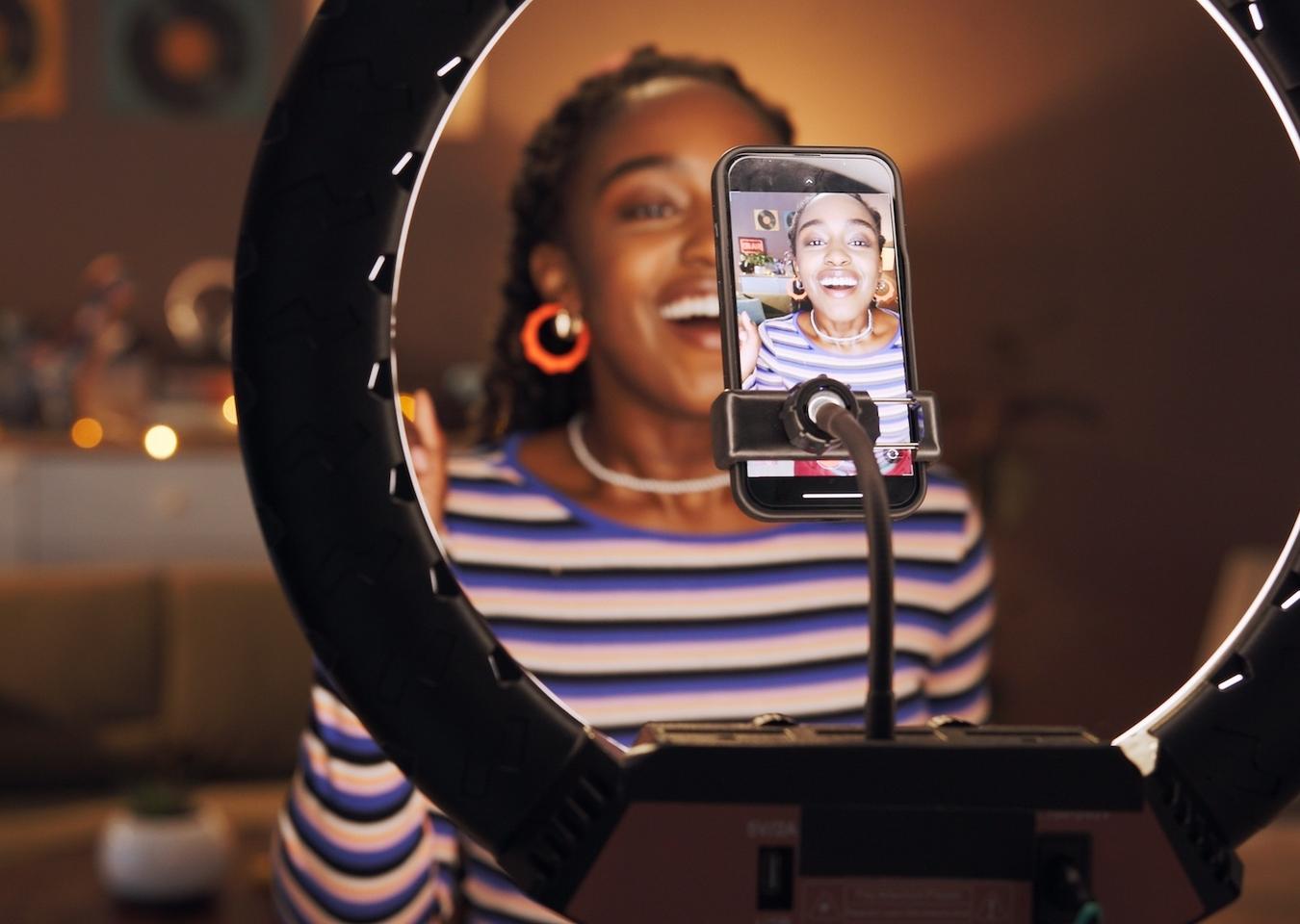
A livestream goes viral when attention spreads faster and farther than the channel's usual audience can explain. Viewers discover a compelling moment, share it or talk about it, and new people arrive while the event is still happening—or find the clips and replay afterward. A high Peak Viewers figure can be part of that story, but a brief spike alone does not prove that the creator gained a lasting audience.
There is no reliable “go viral” switch. A strong breakout usually combines a clear reason to watch now, a moment people can explain to someone else, distribution beyond the regular community, and a stream that remains interesting when unfamiliar viewers arrive. Timing and luck matter, but preparation determines whether the creator can make use of unexpected attention.
This guide explains the mechanics without claiming to know a platform's secret ranking formula. It also shows how to measure a breakout against your own baseline and what to do after the peak.
What Does “Viral” Mean for a Livestream?
“Viral” is a relative description, not a universal viewer threshold. A creator averaging 80 concurrent viewers who suddenly holds 800 for an hour has experienced a major breakout. For a channel that routinely averages 80,000, the same 800-person number means something very different.
The shape of the growth matters as much as its size. A large creator can schedule a celebrity guest and draw a big audience from existing followers. A smaller creator can produce a modest absolute peak but reach a new language community, attract significant outside sharing, and keep some of those viewers for later broadcasts. Both outcomes matter, but only the second clearly indicates spread beyond the established audience.
Use three questions to define a breakout for your channel:
- How unusual was the audience? Compare the stream with a relevant baseline of recent, similar sessions.
- Where did the additional viewers come from? Look for sources beyond normal followers, where your platform reveals them, and note any clips, raids, collaborations, news coverage, or external posts.
- What remained after the moment? Check sustained average audience, watch time, follower growth, replay or clip interest, and later streams.
The first question can be answered with public audience data. The second may require private analytics and observation. The third needs time: a viral moment and durable channel growth are not the same measurement.
The Five Conditions That Make a Breakout More Likely
1. A premise people understand immediately
“Playing games tonight” asks a new viewer to know and like the creator already. “I have three attempts to beat the final boss without taking damage” tells anyone what is at stake. The premise need not be extreme. A repair expert restoring an apparently ruined object, a musician finishing a song with audience input, or a developer testing a new game feature all have visible questions with outcomes.
The title, thumbnail or preview, and first few moments should agree. Packaging that promises a spectacular reveal but opens on an unexplained waiting screen may attract entries without earning attention. On YouTube, creators can examine impressions, click-through rate, traffic sources, watch time, and concurrent viewers in platform analytics. Those measures help separate a weak invitation from a weak viewing experience. They do not amount to a universal viral formula.
For live discovery, clarity must persist throughout the show. New viewers often enter in the middle. A short recap, visible progress, and clear transitions help them understand what is happening without requiring a replay from the beginning.
2. A moment worth retelling
People share specific events more readily than an entire three-hour broadcast. A surprising guest, failed experiment, close match, unexpected reaction, public milestone, or decisive answer gives a viewer a one-sentence story: “You need to see what happened when…”
This does not mean staging a reaction or manufacturing a crisis. It means making the real stakes visible and capturing the result. A planned challenge can create several natural clip opportunities; an unscripted moment can become the strongest one. Either way, someone must notice and distribute it while it is relevant.
Twitch has explicitly invested in Clips and their discovery surfaces, and its 2026 creator updates describe tools to make highlights easier to find and share. A clip can introduce someone to a channel, but clip views should not be counted as live viewers. Track whether viewers arrive during the LIVE, visit the channel afterward, or return for a later session.
3. Distribution outside the core audience
A creator's followers are the first potential audience, not the whole audience. New viewers may arrive through platform recommendations, category browsing, search, shares, a guest's community, a raid, a short-form video, or an external conversation. The exact mix varies by platform and by stream.
On YouTube, live streams can be discovered alongside the platform's other formats, and YouTube provides traffic-source and recommendation information to creators. TikTok says its LIVE feed is personalized using multiple signals, including viewer interactions and information about content. Twitch relies on its own channel, category, collaboration, and Clips experiences. Kick has a different audience and distribution environment. Do not assume that one platform's engagement signal creates the same reach on another.
What a creator can control is more concrete: make the premise easy to share, coordinate with relevant collaborators, prepare the highlight workflow, and publish useful clips where their audience already spends time. Posting a clip is a way to create an entry point, not a guarantee that a recommendation system will amplify the live broadcast.
4. A stream that rewards the new viewer
Virality can expose a weak middle. If the headline moment ends and the host spends the next 20 minutes explaining an inside joke, first-time viewers have little reason to stay. Build smaller payoffs around the main event: the next attempt, a relevant guest conversation, a decision from chat, or a clear follow-up question.
This is where Average Viewers and watch time become important. A giant Peak Viewers number can be created in seconds. Sustained audience requires people to keep finding value after arriving. A raid or major shoutout may cause a visible spike, but the audience curve afterward tells a fuller story.
Large creators illustrate different ways to hold attention. Caedrel can turn an esports match into a shared viewing experience through live commentary and ongoing stakes. xQc can move between topics while relying on an established relationship with his audience. A newer creator can learn from the structure without assuming the same results are available without those existing communities.
5. Timing and wider context
A creator can plan a show well and still compete with a massive game launch, tournament final, platform outage, or breaking story. The reverse is also true: an unexpected event can make a niche topic suddenly relevant. Context influences reach, but it is difficult to isolate from packaging, creator size, or promotion.
Avoid building a strategy around chasing every trend. The opportunity is strongest when a timely event connects with expertise your audience already recognizes. A game analyst covering a decisive patch has a more credible reason to go live than an unrelated channel switching topics solely because a category is popular today.
How Viral Moments Differ Across Platforms
The same clip can travel differently depending on where the original stream happens and how the creator distributes it. Treat the following as planning considerations, not promises about ranking systems.
| Platform | Possible discovery paths | Creator question to answer |
|---|---|---|
| Twitch | Followers, category browsing, collaborations, raids, Clips and related discovery surfaces | Can someone who finds one highlight understand when and why to watch the next LIVE? |
| YouTube | Subscriptions, recommendations, search, Shorts, replay viewing, outside links | Do the title, thumbnail, opening, and replay all deliver the same promise? |
| Kick | Existing followers, categories, creator communities, outside promotion | Where will new viewers first hear about the stream, and how will they find the channel? |
| TikTok LIVE | Personalized LIVE discovery, followers, creator videos, shares | Is the premise clear to someone who enters at any point? |
This article focuses on Twitch, YouTube Gaming, and Kick because those are the channels and public metrics available for creator comparisons on StreamMetrix. TikTok provides a useful contrast in how people may encounter a LIVE, but it should not be mixed into a cross-platform benchmark without consistent data and definitions.
What Popular Streamers Can Teach About Different Breakout Paths
The point of studying famous streamers is to identify mechanisms, not to copy a celebrity-scale result. Their follower bases, guests, budgets, and press attention are part of the explanation.
Kai Cenat illustrates the event model: a marathon, guest appearance, or public milestone can give many viewers a common reason to tune in at the same time. The analytical question is not only how high the audience peaked, but whether ordinary streams afterward held more viewers than before the event.
IShowSpeed illustrates a different path through IRL travel, unpredictable encounters, and moments that can be understood outside the original broadcast. A short clip may attract a vast audience even when only a portion of those viewers watch the full LIVE. Compare clip interest and live audience separately.
Westcol is a useful example for event-led Spanish-language streaming on Kick. A creator studying his numbers should separate special occasions from regular broadcasts and account for the language and market of the audience before making comparisons with English-language Twitch channels.
Caedrel shows how an external event can supply stakes that build over several hours. A major esports series is not an ordinary gaming session. Compare his tournament coverage with comparable coverage, and avoid attributing an event-driven spike to one title change.
Ludwig offers a model of formats people can explain: challenges, collaborations, and shows with recognizable rules. When a concept can be summarized quickly, clips and outside discussion have a clearer entry point. That is a format observation, not proof that any one show went viral because of a specific mechanism.
xQc and TheBurntPeanut also remind us that creator identity can be the draw. Established personalities can hold attention across varied content in ways a new channel may not. Study how their audiences respond to category changes and individual broadcasts, but use creators closer to your size for operational benchmarks.
These links lead to public channel profiles. Public numbers can show audience scale, stream history, category mix, and growth where available. They cannot disclose every creator's private traffic source, audience retention, revenue, or the exact causal reason for a spike.
How to Measure Whether a Stream Actually Broke Out
Start with a baseline. Choose recent broadcasts with a similar format, category, length, language, and day or time. A 30-day period can be useful for an active channel, but a creator with only a few streams may need a longer window. Mark major events separately.
Then compare the candidate stream with the median regular broadcast, which is less distorted by one unusually successful show than a simple average. At minimum, use Peak Viewers, Average Viewers, Hours Watched, airtime, and Followers Gain when they are available and defined consistently. Add first-party traffic sources, unique viewers, and retention when your platform provides them.
Three calculations worth making
Peak lift = event Peak Viewers ÷ median regular Peak Viewers. This tells you how unusually high the moment was relative to your normal peaks. A result of 4 means the event peak was four times the selected baseline, not that the platform made it “four times more viral.”
Average audience lift = event Average Viewers ÷ median regular Average Viewers. This helps distinguish a large one-off moment from a broadcast that held an unusually large audience throughout.
Follower gain per 1,000 Hours Watched = Followers Gain ÷ Hours Watched × 1,000. This is an optional normalization for streams of different sizes. It is not the same as follower conversion per unique viewer and can be affected by how a platform counts or revises followers. Use it only when those fields are consistently available.
Consider this fictional example:
| Metric | Median regular LIVE | Event LIVE | Relative result |
|---|---|---|---|
| Peak Viewers | 200 | 1,200 | 6× |
| Average Viewers | 120 | 240 | 2× |
| Hours Streamed | 2 | 3 | 1.5× |
| Hours Watched | 240 | 720 | 3× |
| Followers Gain | 20 | 90 | 4.5× |
The event produced a dramatic peak, but the typical audience only doubled. It may still be a strong result, especially if it brought new followers. The next step is to inspect the audience timeline, promotion, and subsequent streams. Did a single raid create the 1,200-viewer high point? Did the creator keep any new viewers? Did a clip continue to circulate? Public metrics alone cannot answer all of those questions.
Measure the aftermath
A breakout should be evaluated over several time windows. Immediately after the stream, assess the peak, average audience, total viewing, and followers. In the following days, check clip and replay activity where possible. Over the next several comparable broadcasts, compare the baseline again. If the regular audience remains higher, the viral moment may have contributed to sustained growth. If it returns to its previous level, the stream may still have been a successful one-off event.
Avoid claiming causation when other things changed at the same time. A new game, regular collaborator, paid campaign, altered schedule, or broader news event can also shift the baseline.
A Practical Plan for Creating Better Breakout Opportunities
You cannot schedule virality, but you can design a stream that is understandable, worth sharing, and prepared to welcome unfamiliar viewers.
Before going live: build a format with stakes
Write one sentence that explains the event without relying on the creator's name: “Tonight we are trying to repair a broken console using only parts from a thrift store,” or “Three chefs make dinner from the same five ingredients.” If someone cannot relay the premise to a friend, narrow it.
Set several intermediate milestones, not just a finale. Prepare a clean title and preview, a reliable audio and video setup, the people who can clip or moderate the stream, and a follow-up plan. For an event, tell viewers when the consequential part begins rather than expecting them to watch an hour of setup.
During the stream: serve both regulars and newcomers
Deliver the announced premise early and restate the stakes when the audience changes. Let chat influence meaningful decisions without turning every minute into a vote. A new viewer should be able to understand the current goal, the previous result, and the next payoff.
If a sudden audience arrives, avoid stopping the show to celebrate the number for too long. Introduce the context in one or two lines and keep the activity moving. A sudden increase is an opportunity to earn attention, not evidence that attention has already been earned.
After the stream: convert one moment into a series
Identify a short, self-contained highlight and preserve enough context for someone who was not there. Publish a clip where the audience can discover it, but avoid trimming it into a misleading reaction. Then make a related next broadcast: a second attempt, a post-event breakdown, or a new challenge that follows naturally.
Give people a concrete reason to return. “Follow for more” is less informative than “We test the repaired console on Friday.” Check the results of the follow-up before concluding that the original clip built a repeat audience.
| Stage | Practical action | Evidence to review |
|---|---|---|
| Plan | One-sentence premise and visible milestones | Does the title match what happens? |
| Launch | Begin the promised activity promptly | Entries and early watch behavior where available |
| Share | Capture a clear moment with context | Clip reach and referral traffic where available |
| Hold | Give newcomers another payoff | Average audience and audience curve |
| Return | Schedule a relevant next LIVE | Later Average Viewers and repeat participation |
This is a planning framework, not a platform ranking checklist. Treat each step as a hypothesis you can test against your own streams.
How Creators, Brands, and Agencies Should Read a Viral Stream
For a creator, the main question is whether the breakout builds a larger and more loyal regular audience. A dramatic peak may justify a follow-up format, but it should not force every subsequent stream to become an expensive spectacle.
For a brand, the size of the peak is only the beginning. Was the product part of the moment or a logo in the background? Did the audience match the intended market and language? Were comments relevant and the sponsorship clearly disclosed? Sales and conversion usually require the brand's private campaign and commerce data. Public Peak Viewers cannot establish return on investment.
For an agency or publisher, a creator's ordinary baseline and ability to produce repeat events may matter more than a single viral clip. Separate organic attention from paid support, collaborations, platform features, tournament interest, or outside news. When selecting talent, review several regular broadcasts and comparable events rather than sorting profiles by the highest all-time peak.
Use StreamMetrix to Put the Peak in Context
StreamMetrix lets you examine public Twitch, YouTube Gaming, and Kick channel performance, including Average Viewers, Peak Viewers, Hours Watched, Hours Streamed, follower changes, categories, and recent streams where available. Begin with a channel's own regular baseline, then inspect the breakout broadcast and the following weeks.
The next comparison should be a relevant peer group. Match platform, language, category, format, and activity period. Compare event streams with other events and recurring streams with other recurring streams. Our guide to analyzing competitors' livestream performance provides a fuller benchmarking workflow.
Combine those public measures with your private platform analytics for sources of traffic, impressions, unique viewers, retention, replay behavior, and conversions where offered. StreamMetrix can reveal the external shape of a breakout. Your account data and the content itself explain more of what happened inside it.
Final Takeaway
A viral livestream is a chain of events: a clear and timely premise earns entry, a memorable moment travels, new viewers arrive, and the stream gives them a reason to stay. The creator's next broadcasts determine whether that attention becomes growth.
Measure the chain rather than celebrating one large peak. Compare the event with a realistic baseline, pair Peak Viewers with Average Viewers and Hours Watched, identify outside distribution where the evidence allows it, and revisit the numbers after the next few streams. You cannot guarantee a breakout. You can make each show easier to discover, easier to share, and more rewarding to watch.
