Most creators chase their first sponsorship before they can answer the one question every brand asks: who actually watches you, and do they stick around? A channel with 800 highly engaged concurrent viewers often closes deals faster than one with 5,000 passive followers. Sponsorships are won on proof, not follower counts — and the proof is in your data.
This guide walks through how brand deals work on Twitch, what advertisers look for, and how to build a media kit grounded in real numbers rather than vanity metrics.
What is a streamer sponsorship?
A sponsorship is a paid agreement where a brand pays you to feature its product or message inside your stream. On Twitch, several of these formats are built directly into the Creator Dashboard, so the brand integrates natively rather than bolting an ad onto your content.
The main sponsorship formats on Twitch
| Format | What it is | Best for |
|---|---|---|
| Streamer-read ads | You read a brand's script live, in your own voice | Authentic, personality-led promotion |
| Channel skins | Branded visuals around your player and chat | Always-on visibility during a campaign |
| Sponsored subs | Brand-discounted subscriptions for your viewers | Growing subs while a brand foots part of the bill |
| Sponsored streams | A full stream built around a game or product | Game launches and bigger campaign budgets |
Twitch Partners can access many of these through the platform's Sponsorships portal — some campaigns open to a broad pool of creators, others invite-only. One safety note worth repeating: Twitch never sends contracts or campaign invites outside your Creator Dashboard, so treat any DM "brand deal" with suspicion.
What do brands actually look for?
Advertisers want creators who can carry a message authentically and professionally. That breaks down into a few concrete things you can influence:
- Consistent engagement. Average viewers and chat activity matter more than a big follower number, because they show a live, attentive audience.
- Audience fit. A brand selling gaming chairs wants your viewers to be gamers. Knowing your audience geography, language, and the games you stream lets you pitch the right brands.
- Reliability. Brands reward creators who hit deliverables and stream on a predictable schedule — flakiness kills repeat deals faster than low numbers.
- Brand safety. Clean, guideline-compliant content and proper sponsorship disclosure make you a low-risk bet.
Strong sponsored content builds trust with advertisers, and that trust is what turns a one-off deal into a recurring partner.
How do I build a media kit that brands trust?
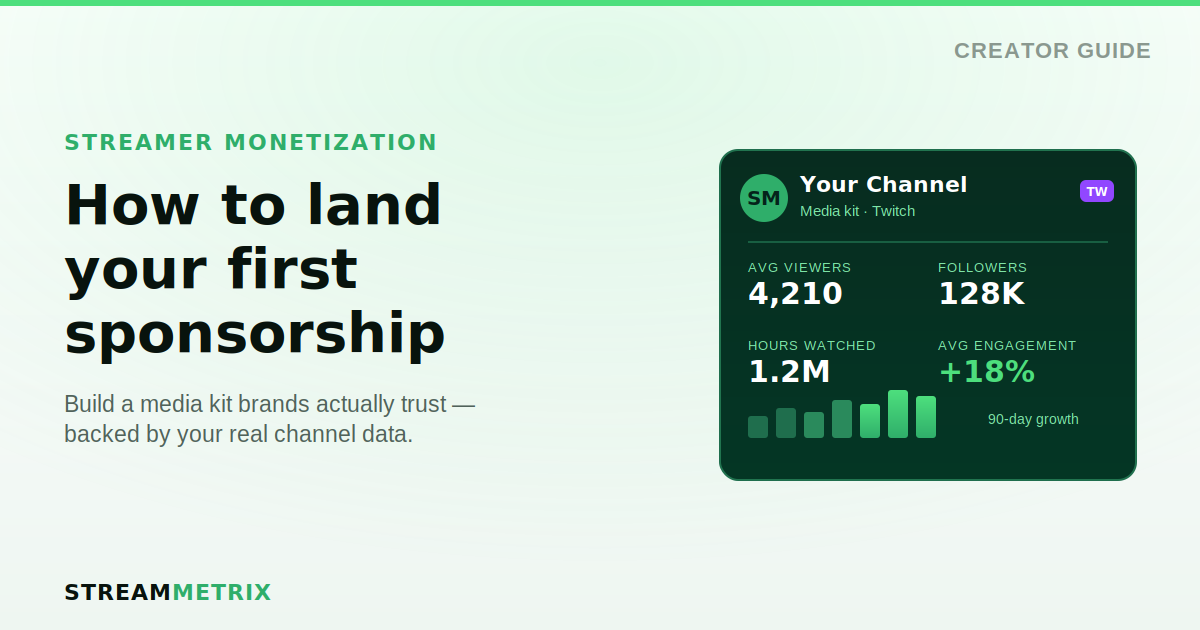
A media kit is a one-page snapshot that answers a brand's questions before they ask. The mistake most creators make is filling it with screenshots they took on a good night. Brands can tell. Pull verifiable, period-based numbers instead — the kind a sponsor can cross-check.
What to include
- Audience size and engagement — average viewers, peak viewers, and hours watched over the last 30 days, not your all-time best.
- Growth trend — a follower and viewership trend line shows momentum, which is often more persuasive than the raw total.
- Audience profile — top countries, languages, and the games or categories you stream most.
- Past sponsorships — any brands you've worked with and, if you have it, a result or two.
- Contact and rates — how to reach you and a clear starting point for pricing.
You can pull most of these straight from your channel's analytics page on StreamMetrix, which tracks average viewers, peak viewers, hours watched, follower growth, and the games you stream — exactly the figures a brand will want to verify.
How do I know my rate and pitch the right brands?
There's no universal price, but you can anchor your rate in two things: your average concurrent viewers (the closest thing to a "reach per stream" number) and your engagement relative to channels of a similar size. This is where comparison helps.
Take two creators in the same lane. Kai Cenat operates at a scale where deals are negotiated directly with major brands, while a mid-sized variety streamer like Pokimane shows how audience loyalty and a defined niche can matter as much as raw size. Lining your own numbers up against channels a tier above and below you gives you a realistic sense of where your rate should sit — and which brands are likely to say yes.
A practical approach:
- Find three to five channels close to your size and content type.
- Compare average viewers, engagement, and audience geography against yours.
- Note which brands already sponsor them — those advertisers are pre-qualified leads for you.
- Pitch with a media kit that shows where you're stronger (often engagement or a tighter niche).
How do I get certified and stand out?
Twitch offers a Creator Sponsorship Certification that unlocks two concrete perks: a 12-hour head start on select first-come Open Invite campaigns, and a profile flag that lets brands search specifically for certified creators. In a crowded field, that's a low-effort way to signal you're serious.
Certification raises the bar, too. You're expected to complete deliverables, follow campaign requirements, and disclose sponsorships with the right content label. Repeatedly cancelling campaigns or skipping disclosure can get the badge revoked, so only accept what you can deliver.
The takeaway
Sponsorships go to creators who can prove their value, not just claim it. Get your data in order, build a media kit on real numbers, benchmark yourself against comparable channels, and approach brands that already invest in creators like you. The numbers don't have to be huge — they have to be honest and well presented.
Ready to build your pitch? Pull your channel's stats on StreamMetrix for the average viewers, growth, and audience data that belong in every media kit. For more creator guides, visit the StreamMetrix blog.
