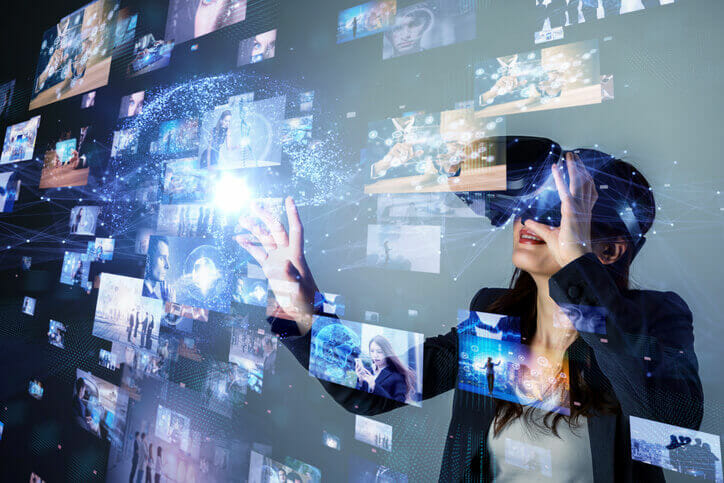
In 2026, the computer screen is no longer a wall—it’s a window. With the mass adoption of spatial computing devices like the Apple Vision Pro and lightweight AR glasses, streaming has moved from 2D pixels to 3D environments. For the first time, your audience isn't just "watching" you; they are "entering" your space.
By early 2026, "flat" video is increasingly seen as the "radio" of the digital age. As hardware becomes lighter and AI-driven 3D rendering becomes instant, the most successful streamers are those who have embraced Spatial Computing. Whether you’re an educator, a gamer, or a brand, the future of engagement is immersive. Here is how the leaders of 2026 are breaking the fourth wall.
1. Spatial Computing: Your Stream as an Environment
In 2026, platforms like YouTube and Twitch have integrated "Spatial Feeds." If a viewer is wearing a headset or AR glasses, they don't see a video box; they see you sitting in their actual room or inside a custom-designed virtual studio.
-
The Strategy: Use Apple Immersive Video Utility to broadcast a 180° or 360° field of view. This allows viewers to "look around" your setup, creating a sense of presence that 2D video can never match.
-
Interactive AR Overlays: Instead of a text-based chat, your "Hype" alerts and comments now appear as 3D objects floating in your space. You can literally "grab" a viewer's question out of the air.
2. The Power of the "Digital Twin"
A Digital Twin is a high-fidelity 3D replica of your physical streaming space. In 2026, creators use these to offer "VIP Access" without actually being live.
-
The Tactic: While you are offline, fans can explore your "Digital Twin" studio in VR. They can see your gear, look at "Easter eggs" you’ve hidden, or watch replays projected on the virtual walls of your twin studio.
-
Sponsorship 2.0: Brands are no longer just buying a "shout-out." They are paying to have their 3D product twin placed on your virtual desk, where viewers can "pick it up" and examine it in their own homes via AR.
3. "First-Person" Immersive POV
Thanks to the integration of Lidar and camera arrays in 2026 wearables, "POV Streaming" has become a top-tier genre.
-
The Experience: In a 2026 POV stream, the viewer sees exactly what you see, but with a 3D depth that makes them feel like they are inhabiting your body.
-
Use Case: This is the gold standard for Educational Streaming. A surgeon, a mechanic, or a chef can stream their work, and the student can see the exact depth and angle of every movement in their own headset.
4. Overcoming the "Entry Barrier" in 2026
You don’t need a $3,000 headset to start immersive streaming.
-
The "Hybrid" Approach: Use a standard 2D camera for your main feed, but use an AR app to project your "Chat Polls" as 3D holograms on your desk. Even 2D viewers will appreciate the high-tech aesthetic, while AR viewers will get the full 3D experience.
-
WebXR: Most 2026 browsers support WebXR, meaning your "Immersive Hub" can be accessed via a simple smartphone—users just move their phone around to see the 3D space.
| Feature | Standard 2D Live | Immersive Spatial Live |
| Viewer Role | Observer | Participant |
| Device | Phone / Laptop | AR Glasses / VR Headset |
| Engagement | Scrolling & Typing | Grabbing & Exploring |
| Monetization | Ad-Sense & Subs | Virtual Goods & 3D Placements |
The World is Your Studio
In 2026, the boundaries between the digital and physical worlds have truly merged. Immersive streaming isn't just a new "filter"; it's a new way of existing with your community. Those who start building their Digital Twins and experimenting with Spatial Audio today will be the icons of tomorrow's 3D web.
